The Complete Indian Veg Thali Guide
Rice, roti, dal, sabzi, curd, salad and more — here is what each part of a classic Indian veg thali brings to your plate, and why the combination works.
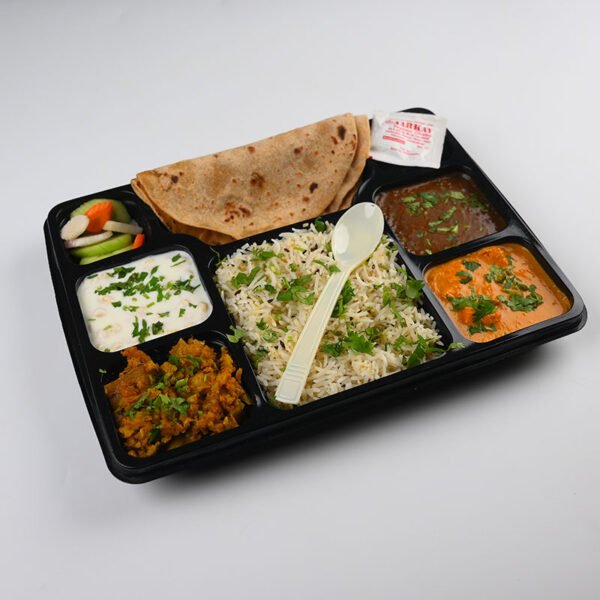
The Indian thali is one of the world’s most balanced meals — built over centuries to bring together every food group on a single plate. Here is what each component does for you.
What is on a balanced thali
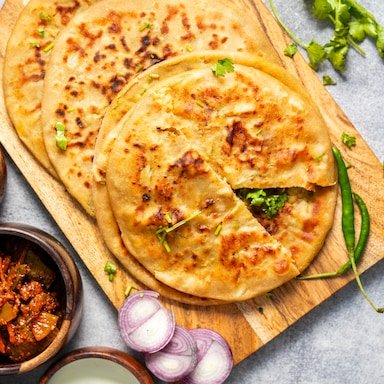
- Roti / chapati — whole-wheat fibre and slow-release energy.
- Rice — easy-to-digest carbohydrate that pairs perfectly with dal.
- Dal — the protein hero of the plate, rich in fibre and iron.
- Sabzi (vegetables) — vitamins, minerals and antioxidants.
- Paneer — calcium and high-quality vegetarian protein.
- Curd / raita — gut-friendly probiotics that aid digestion.
- Salad — raw fibre, crunch and hydration.
- Pickle & papad — a small burst of flavour, best in moderation.
- A little sweet — a satisfying, happy finish.
Why the combination works
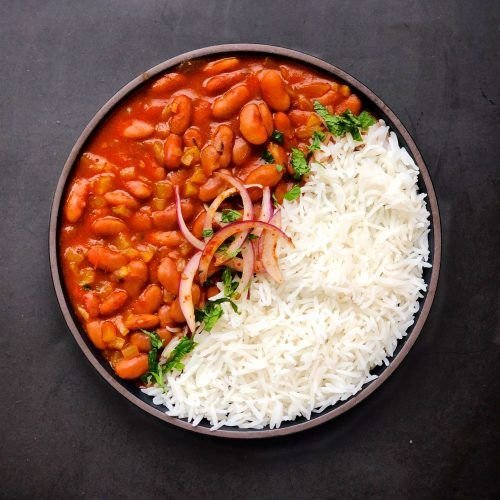
Rice and dal together form a complete protein, with all the essential amino acids your body needs. Add the fibre from roti and sabzi, the probiotics from curd, and the vitamins from salad, and you have a meal that is genuinely complete — not just filling.
Order a balanced thali
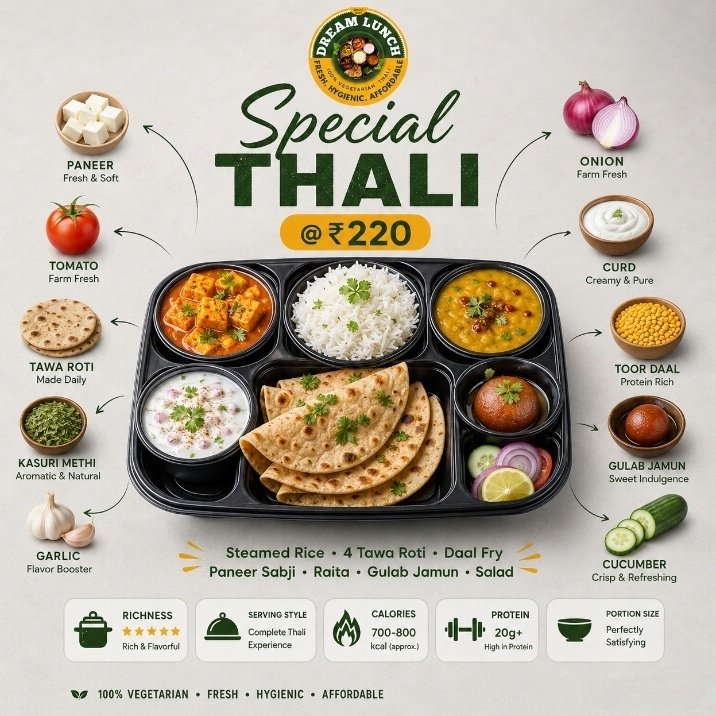
Dream Lunch’s Regular and Special thalis are built on exactly these principles: a proper mix of dal, sabzi, roti, rice and sides, cooked fresh and portioned right.
Frequently Asked Questions
How much protein is in a veg thali?
A typical thali with dal, paneer and curd provides roughly 15–25 g of protein — a solid share of a day’s needs in one meal.
Why are rice and dal eaten together?
Together they form a complete protein, supplying all the essential amino acids that rice or dal alone would miss.
Is a thali good for daily lunch?
Yes — it is one of the most balanced single-plate meals, covering grains, protein, vegetables and dairy at once.